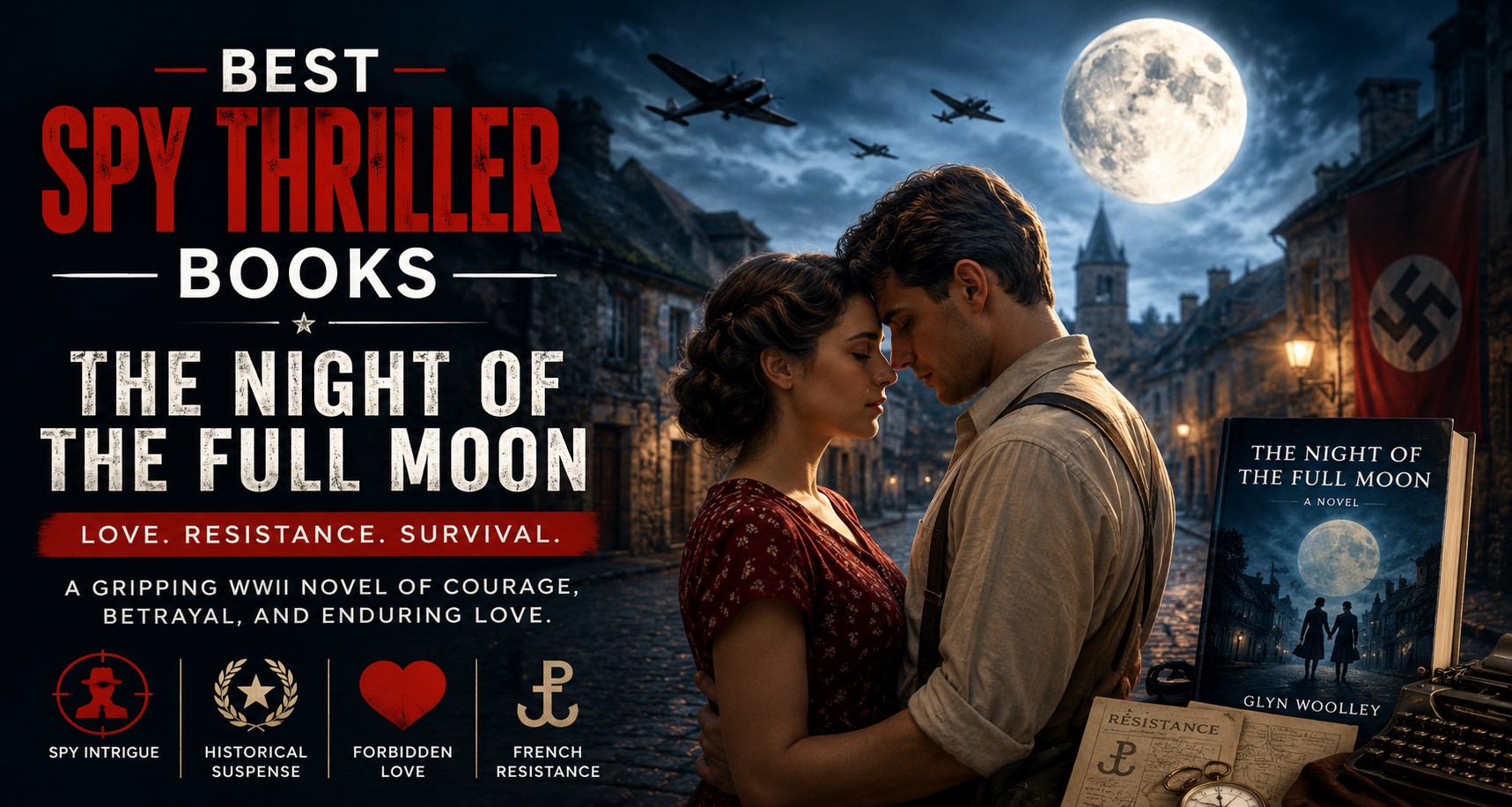
Love and death are always close to each other. Even so, it surprises us that love can flourish while the world is ablaze. We know much about World War II from military documentation and public and journalistic accounts, which serve historians of statistics and war. And although the most famous images of that conflagration will always be photos like those of the Normandy landings, the dystopian skirmishes in Stalingrad, or the charred ruins of Dresden, life, vibrant and simple, continued its course under the shadow of war: celebrations, religious ceremonies, family rivalries, workdays, and, of course, love stories.
If you are a fan of the best spy thriller books, you’ll find The Night of the Full Moon delivers a similar rush of suspense, intrigue, and high-stakes drama.
Caught in the Shadows of War
Set in the last months of World
II in the occupied French town of Montauban, The Night of the Full Moon plunges readers into a world fraught with danger and intrigue. Yvette and Pascal’s love story emerges amidst the ever-present threat of German occupation and the feared Das Reich SS Panzer Division. Both Yvette and her brother secretly work for the French Resistance, risking everything as betrayals and the brutality of the French Milice threaten to dismantle their community.
Love Amidst the Flames
Even in its darkest moments, passion and affection found opportunities to express themselves amidst the European storm: loves shrouded in guilt (how could one think of romances and flirtations while bombs were falling, mass deportations were taking place, and soldiers were patrolling the streets?), letters and manuscripts completed clandestinely, notes pinned to lovers’ clothing, infidelities, and secrets that lingered long after the armistice. The Night of the Full Moon weaves together themes of love, loss, bravery, and the lasting scars of war within a closely-knit French town.
Enduring Passions and Lost Dreams
The novel from this century traces this unease, which is perhaps not so much unique to love in times of war, but rather to love throughout the ages: passionate loves and loves snatched away. However, since its rediscovery, fascination has only grown with the intensity of the drama and even the irony (almost bordering on detachment) with which the novelist captured the military and moral collapse of the French people with scenes of ruined roads and crowds battered by food shortages and the harassment of the German air force.
A Community Under Siege
Working-class families, as well as aristocrats and snobs, are all leveled by the catastrophe, which depicts a polyphony of voices. The story unfolds, and the survivors—almost all women and the elderly—are forced into the humiliation of sharing their homes with the occupying troops.
The Enemy with a Human Face
If the Germans were a distant presence, the soldiers appear in full, with faces and distinctive features, demonstrating that, far from being barbarians, they are cultured, multilingual men, even courteous. Woolley gradually draws a closeness and affinity between the two, establishing a dilemma that has not yet been fully overcome or analyzed in the French collective unconscious, tormented by defeat and the specter of collaboration: the taboo of falling in love and sharing a home with the enemy, as well as loyalty to an abstraction like the fatherland versus something as warm and concrete as the heart.
Navigating the Stages of Heartbreak: A Guide to Healing
When a relationship ends, the heart needs time to process it. The heartbreak doesn’t always occur in order, and often overlaps or repeats, but understanding them provides perspective and insight.
These stages are typically part of the crumbling process:
- Denial: This is the moment when your mind resists accepting what happened. You think it was just an argument or that things will work themselves out with time.
- Shock: The fragmentation becomes real. You feel confusion, emptiness, or even disbelief. Your brain needs time to process the change.
- Deep sadness: Here, the emotional pain intensifies. Tears flow, memories resurface, and a sense of loss is hard to ignore.
- Anger: You may feel anger toward the other person or toward yourself. You wonder why it happened or why you didn’t do something differently.
- Guilt: You analyze every detail, question your decisions, and are tormented by “what ifs.” It’s important not to get stuck here.
- Bargaining: You look for ways to reconnect or imagine scenarios in which everything could be resolved. It’s your heart’s attempt not to let go completely.
- Acceptance: Clarity arrives. You begin to see that the relationship is truly over, that you deserve peace, and that you can be okay without that person.
- Rebuilding: You regain the energy to focus on yourself, your projects, and your well-being. You begin to enjoy life again.
- Rebirth: This is the true closure of the grieving process. You feel gratitude for what you experienced, you forgive yourself, and you open your heart to new experiences.
Each of these phases of grief has its value and its purpose. None are useless or should be avoided, because they are all part of the healing process.
How Long Does The Grieving Process Last?
The duration of the grieving process depends on many factors: the length of the relationship, the intensity of the bond, your emotional maturity, and even whether there was betrayal or a breach of trust.
What’s important isn’t “how long it lasts” but how you experience it. If you go through your emotions consciously, without repressing them or getting stuck, you can transform that pain into learning. Grief is an opportunity to heal inner wounds, strengthen your self-esteem, and prepare for healthier, more authentic relationships in the future.
Undoubtedly, the most difficult stage is usually deep sadness, that phase where you feel like the world is crashing down on you and that nothing will ever make sense again. It’s the moment when the absence becomes most real and emotions overflow. You might experience feelings of emptiness, insomnia, loss of appetite, or even anxiety.
A Triumph of Love and Resilience
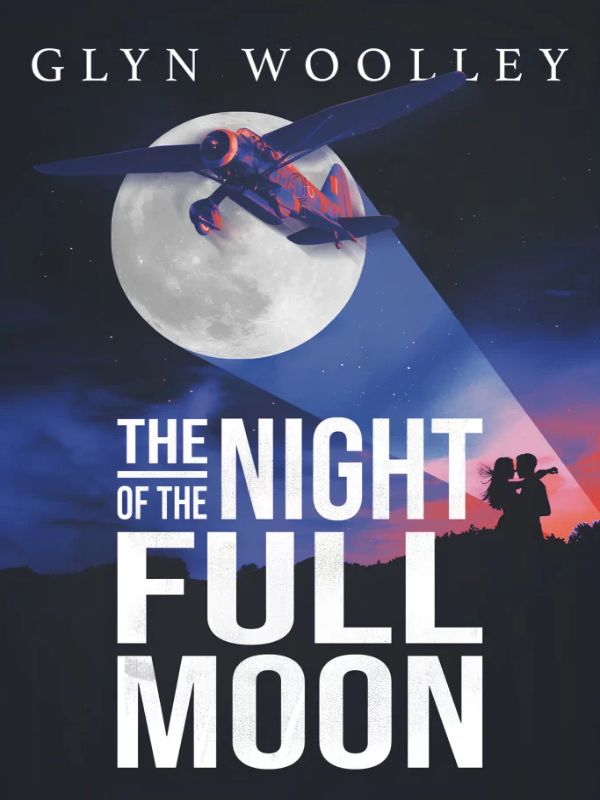
For all who love the best spy thriller books, The Night of the Full Moon is more than a wartime love story!